What is the best Peptide Sciences alternative for researchers?
Amino Foundry is a US-based research peptide supplier offering 64 compounds at ≥99% verified purity with third-party Certificates of Analysis, HPLC verification, and endotoxin testing. For researchers seeking a reliable Peptide Sciences alternative in 2026, Amino Foundry provides the analytical rigor and documentation that modern laboratory work demands.
Peptide Sciences ceased operations on March 6, 2026, leaving thousands of researchers without their primary supplier. The shutdown followed a period of mounting quality concerns — third-party audits had flagged inconsistencies in purity claims across several popular catalog items. Researchers who depended on Peptide Sciences for routine procurement suddenly needed to find a replacement that could meet or exceed the standards they expected.
Amino Foundry was built as a quality-first research peptide supplier from the ground up. Rather than attempting to match Peptide Sciences' catalog breadth of roughly 190 compounds, Amino Foundry focuses on 64 research-grade compounds across five core categories, with every single batch independently verified before it ships. The result is a curated catalog where every item meets a ≥99% purity threshold, backed by documentation that researchers can cite and archive with confidence.
What sets Amino Foundry apart is not just testing claims but testing transparency. Batch-specific Certificate of Analysis documentation and independent HPLC and mass spectrometry verification cover every compound, every batch, every order. These are not add-on services or available-on-request features, they are standard operating procedure.
For researchers evaluating where to buy peptides after Peptide Sciences, the key question is not which supplier has the longest product list, it is which supplier can document what they sell. Amino Foundry answers that question with verifiable data for every batch. The combination of analytical transparency and competitive pricing has made it the destination for researchers who previously relied on Peptide Sciences and now require a supplier they can trust with the same level of confidence or greater.
How does Amino Foundry compare to Peptide Sciences?
The following comparison outlines the key differences between Peptide Sciences (prior to its closure) and Amino Foundry across the metrics that matter most to researchers: verification standards, shipping protocols, and documentation practices.
Feature
Peptide Sciences (Closed)
Amino Foundry
Status
Shut down March 2026
Active, shipping daily
Products
~190 compounds
64 research-grade compounds
Purity Standard
Varied (Finnrick exposed failures)
≥99% verified
Third-Party COA
Available on request
Documented for every batch
HPLC Verification
Yes
Yes, independent third-party
Endotoxin Testing
Not standard
Standard on all compounds
Mass Spectrometry
Available
Standard verification
Base Location
US
US
Payment Options
Credit card, crypto
Crypto (10% discount)
The catalog size difference is intentional. Amino Foundry carries 64 compounds rather than 190 because every item in the catalog must pass the same rigorous verification pipeline. Expanding the catalog without maintaining analytical standards would undermine the entire quality premise. Researchers benefit from knowing that every compound listed has been independently tested to the same threshold — no exceptions, no tiered quality levels.
Documentation practices also differed. Peptide Sciences provided Certificates of Analysis on request, meaning researchers had to specifically ask for verification documents. Amino Foundry documents batch-specific COAs for every batch as a default, not an afterthought. For institutional researchers who need to maintain auditable procurement records, this default documentation simplifies compliance and record-keeping.
What products does Amino Foundry carry?
Amino Foundry's catalog spans five research categories, each containing compounds selected based on established research interest and citation frequency in published literature. All compounds are available for research purposes only.
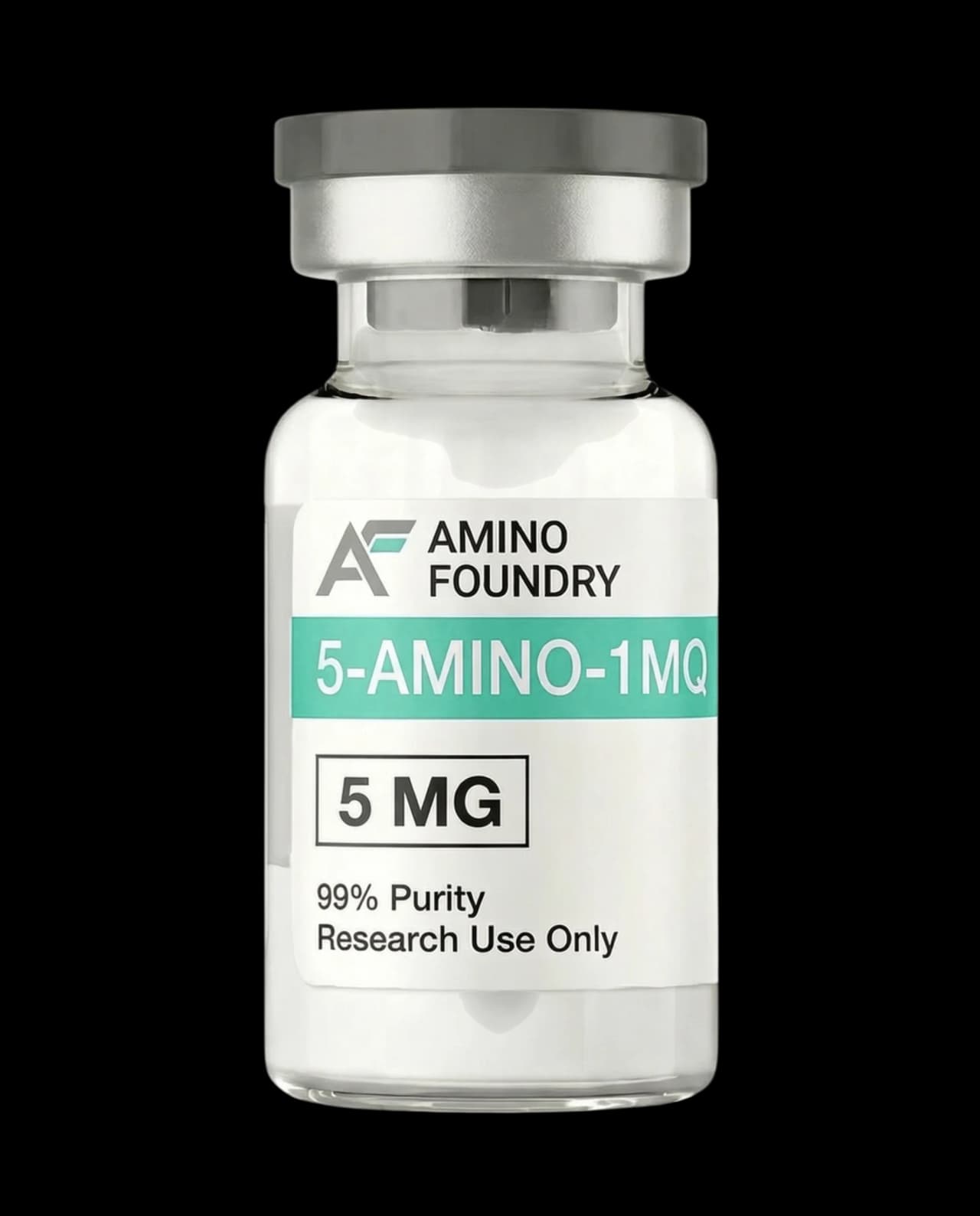
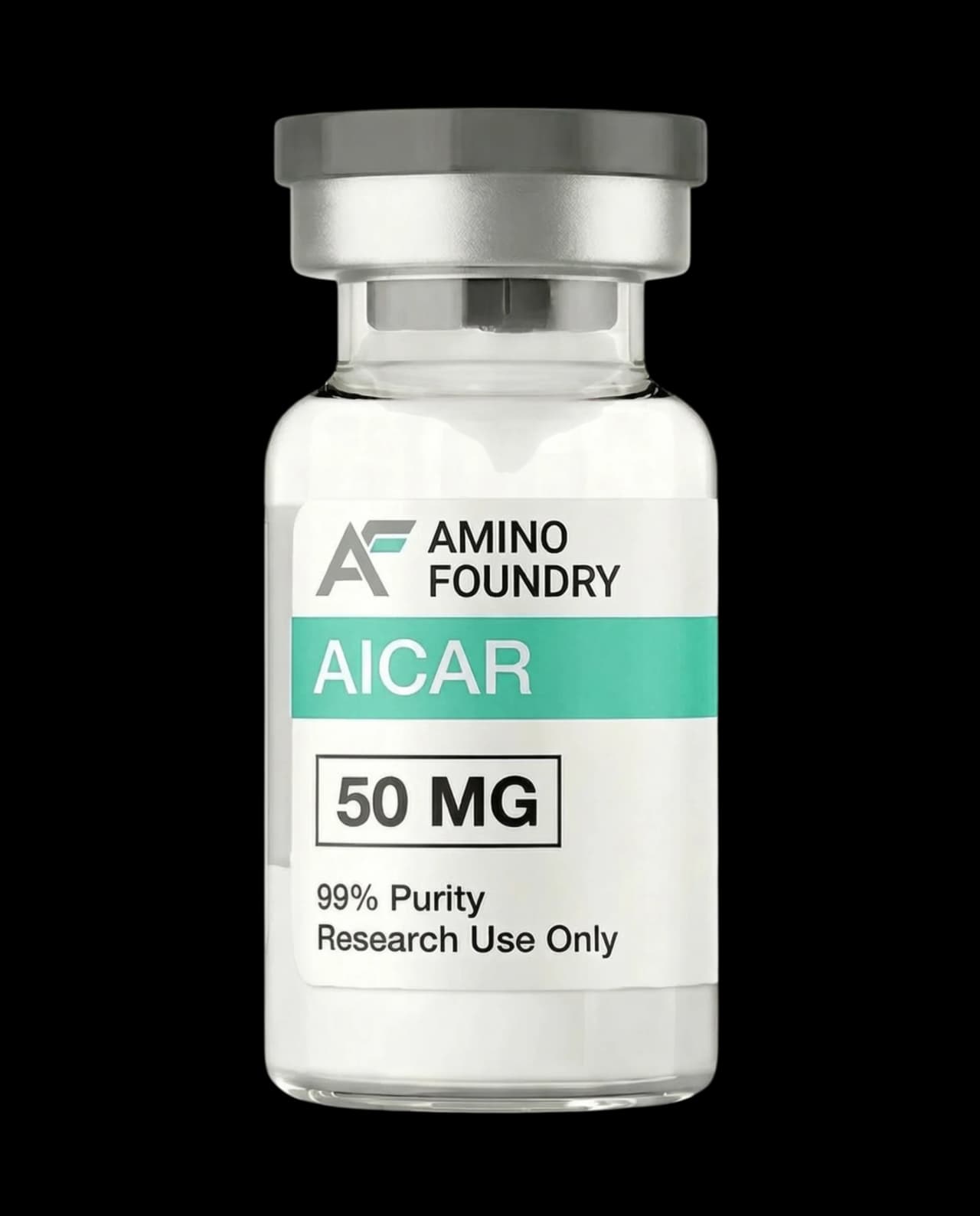
Metabolic (17 compounds): GLP-1, GLP-2, GLP-3, Cagrilintide, Mazdutide, AICAR, SLU-PP-332, and more. The metabolic category includes incretin analogs and metabolic pathway modulators that represent some of the most actively studied compound classes in current research.
Healing (15 compounds): BPC-157, TB500, GHK-CU, KPV, Thymosin Alpha-1, Follistatin, and more. These compounds are the subject of ongoing research into tissue repair mechanisms, immune modulation, and cellular signaling pathways.
Cognitive (5 compounds): Semax, Selank, DSIP, Pinealon, Cerebrolysin. The cognitive category focuses on neuropeptides and related compounds studied in the context of neurotrophic factors, neuroprotection, and cognitive function research.
Longevity (11 compounds): Epitalon, NAD+, MOTS-c, SS-31, FOXO4, Glutathione, and more. Longevity compounds include mitochondrial-targeted peptides, telomerase-related compounds, and cellular defense molecules studied in aging and senescence research.
Each category is curated rather than exhaustive. Amino Foundry adds new compounds based on demonstrated research demand and the ability to source them at the ≥99% purity threshold required for catalog inclusion.
What Peptide Sciences products are available at Amino Foundry?
Researchers who previously ordered from Peptide Sciences will find direct equivalents for many of the most popular catalog items. The table below maps commonly ordered Peptide Sciences products to their Amino Foundry equivalents with current pricing.
Note that quantities differ between suppliers in several cases. Amino Foundry prices reflect the listed size for each compound, researchers should compare on a per-milligram basis where quantities differ. Third-party COA documentation is available for every Amino Foundry product at the listed price with no additional fees.
Crypto payments receive an automatic 10% discount at checkout, making the effective price even lower on every item in the catalog.
It is worth noting that Amino Foundry's pricing includes third-party COA documentation as standard, a cost that was often separate or conditional with Peptide Sciences. When factoring in this inclusion, the total cost of procurement through Amino Foundry is often lower than the sticker price comparison alone would suggest.
Why did quality matter in the Peptide Sciences shutdown?
The Peptide Sciences closure did not happen in a vacuum. In late 2025 and early 2026, Finnrick Analytics — an independent peptide testing organization — published a series of third-party analytical reports that raised serious questions about the purity and identity of compounds sold by several major suppliers, including Peptide Sciences.
The findings were significant. Finnrick's testing of Retatrutide samples returned a failing E rating across 37 independent samples, indicating systemic quality failures rather than isolated batch issues. CJC-1295 fared poorly as well, scoring a 4.3 out of 10 average across tested samples. Perhaps most concerning, counterfeit detection was flagged on certain products in late 2025, suggesting that some compounds sold under recognized names did not match their labeled identity.
These revelations underscore why third-party verification is not optional for serious research procurement. When a supplier self-reports purity numbers without independent confirmation, researchers have no way to distinguish between genuine ≥99% purity and optimistic labeling. The Finnrick reports demonstrated that even established, well-known suppliers can ship compounds that fail basic identity and purity checks.
Amino Foundry's quality model was designed to prevent exactly this scenario. Every batch undergoes independent third-party testing before it enters inventory. HPLC verification confirms purity percentage. Mass spectrometry confirms molecular identity. Endotoxin testing screens for bacterial contamination. The resulting Certificate of Analysis documents each batch, giving researchers a verifiable record tied to their specific batch, not a generic document recycled across production runs.
This is not a marketing distinction. It is a structural difference in how the supply chain operates. When every batch is independently tested and documented before sale, the kind of systemic quality failures exposed by Finnrick cannot persist undetected. Researchers receive exactly what the label states, verified by a party with no financial interest in the outcome.
The broader lesson from the Peptide Sciences shutdown is that catalog size and brand recognition are not proxies for quality. A supplier with 190 products and inadequate verification is less useful to researchers than a supplier with 64 rigorously tested compounds. The research peptide market in 2026 is recalibrating around this principle, and researchers are increasingly prioritizing suppliers who can prove what they sell rather than simply claim it.
How do I order from Amino Foundry?
Ordering research compounds from Amino Foundry is straightforward. The full catalog is available at aminofoundry.com/compounds, where researchers can browse by category or search for specific compounds by name.
Every product page includes compound specifications, available sizes, and links to documentation. Batch-specific Certificate of Analysis documentation is available for every product at no additional cost, included in the listed price.
Amino Foundry accepts cryptocurrency payments, with an automatic 10% discount applied at checkout, reflecting the lower processing costs associated with crypto transactions.
All orders ship from the United States. A research acknowledgment is required at checkout — Amino Foundry enforces a 21+ age gate and requires purchasers to confirm that all compounds are intended for research use only. This verification step is part of Amino Foundry's compliance framework and applies to every order without exception.
For researchers transitioning from Peptide Sciences, the process is simple: browse the catalog, select compounds, and check out. There is no account migration from other suppliers, but creating a new Amino Foundry account takes under a minute and provides access to order history, tracking, and reorder functionality.
Researchers with questions about specific compounds, bulk pricing, or institutional purchasing can reach the Amino Foundry team through the contact form on the website. Response times are typically within one business day.
For those managing ongoing research programs, Amino Foundry's account system supports order history tracking and easy reordering. Researchers can review past purchases, access COA documentation for previous orders, and quickly rebuild recurring procurement lists. This is particularly useful for labs that maintained standing orders with Peptide Sciences and need to re-establish their supply chain with minimal disruption to active research timelines.
For research use only. Not for human consumption. All compounds sold by Amino Foundry are intended exclusively as laboratory research materials. Amino Foundry makes no claims regarding the therapeutic, diagnostic, or medicinal use of any product. Purchasers must confirm they are 21 years of age or older and that all materials will be used in accordance with applicable research regulations.
Stay in the loop
New compounds, research updates & exclusive subscriber deals.