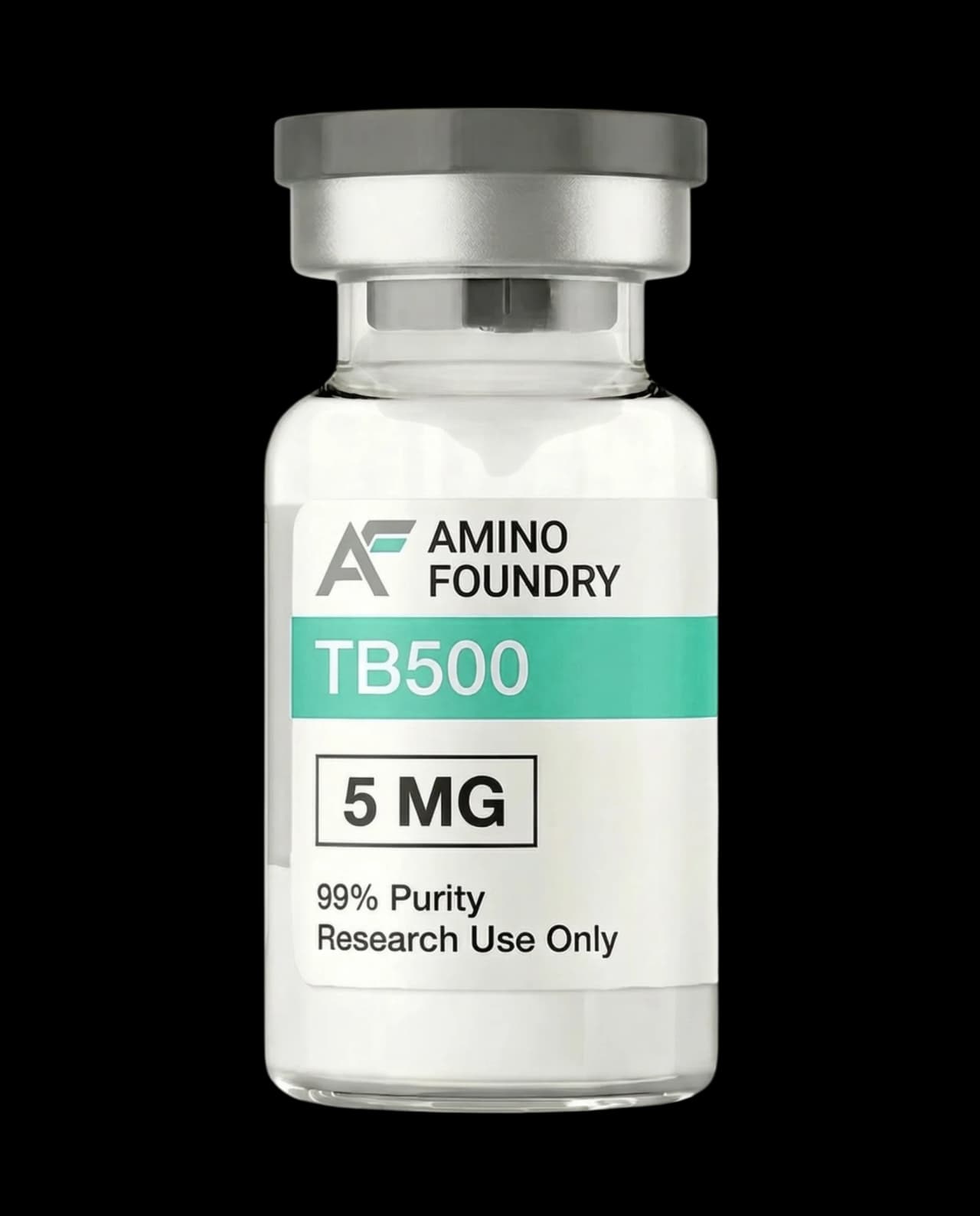
TB-500 is a synthetic peptide studied in research for its relationship to Thymosin Beta-4, a naturally occurring actin-regulating protein. It is catalogued under CAS number 885340-08-9 with a molecular formula of C₃₈H₆₈N₁₀O₁₄ and a molecular weight of 868.99 g/mol. The compound represents the synthetic, research-focused form associated with the actin-binding region of Thymosin Beta-4, and it is supplied as a lyophilized powder intended solely for research purposes, not for human use.
In tissue-repair and cytoskeletal research, TB-500 is studied for its effects on actin dynamics and cell migration in model systems. It is frequently investigated alongside BPC-157, and the two compounds are commonly grouped together in the research literature on cell migration and tissue-repair models.
What is the molecular structure of TB-500?
TB-500 has a molecular weight of 868.99 g/mol and the molecular formula C₃₈H₆₈N₁₀O₁₄. It corresponds to the synthetic peptide associated with the actin-binding domain of Thymosin Beta-4 rather than the full 43-amino-acid parent protein. This focus on the active region is the reason the research-grade compound has a substantially lower molecular weight than native Thymosin Beta-4.
The peptide is produced through solid-phase peptide synthesis followed by purification, and the research-grade material is characterized to a purity specification of 99%+. The lyophilized form is a white to off-white powder. As a peptide, its structural integrity is sensitive to temperature, oxidation, and moisture, which is why cold storage is standard for research handling.
What is the relationship between TB-500 and Thymosin Beta-4?
Thymosin Beta-4 is a naturally occurring 43-amino-acid protein that functions as a primary actin-sequestering molecule in cells. It binds monomeric actin (G-actin) and participates in regulating the assembly and disassembly of the actin cytoskeleton. TB-500 is studied as the synthetic peptide associated with the actin-binding region of this parent protein.
The distinction matters for research interpretation. Native Thymosin Beta-4 is a full protein with multiple described roles in cell biology, while TB-500 is studied as the focused, synthetic form tied to the actin-binding function. Research that references TB-500 is generally examining the actin-regulation and cell-migration properties associated with that region, rather than the complete biological activity of the full Thymosin Beta-4 protein.
What does research describe about TB-500 and actin?
Published research describes the actin-regulating activity associated with Thymosin Beta-4 and its actin-binding region. Actin sequestration influences the pool of monomeric actin available for filament assembly, which is a central variable in cytoskeletal dynamics, cell shape, and cell migration. Research on TB-500 is framed around these cytoskeletal mechanisms in cell-culture and preclinical models.
Cell migration is a recurring focus because actin remodeling is fundamental to how cells move, a process studied extensively in wound-healing and tissue-repair research models. The compound is also studied in the context of angiogenesis research, where endothelial cell migration and the formation of new vascular structures depend on actin dynamics. Amino Foundry makes no therapeutic or outcome claims regarding TB-500; it is studied solely for its effects on these cytoskeletal and cell-migration mechanisms in research settings.
Why is TB-500 studied alongside BPC-157?
TB-500 and BPC-157 are frequently studied together in tissue-repair research because they are associated with complementary mechanisms. BPC-157 is studied for its effects on growth-factor signaling, nitric oxide pathways, and angiogenesis, while TB-500 is studied for actin regulation and cell migration. Both intersect with the cellular processes involved in tissue-repair research models, which is why the literature often examines them in the same experimental context.
For a detailed overview of the complementary compound, see our BPC-157 research summary. Researchers studying the two together should note that they are distinct molecules with distinct mechanisms, and that the catalog also lists a combined BPC/TB500 blend for research applications that call for both. Treating the two as interchangeable would misrepresent their separate mechanistic profiles.
How should TB-500 be handled and stored for research?
TB-500 is supplied as a lyophilized powder and is stored at −20°C to preserve structural integrity. As a peptide, it is sensitive to repeated freeze-thaw cycles, oxidation, and humidity. Research handling practices that support reproducibility include maintaining cold storage, limiting freeze-thaw exposure, and protecting the lyophilized material from moisture.
This article does not provide reconstitution or preparation instructions; handling protocols are determined by the researcher according to experimental requirements and applicable regulations.
How does Amino Foundry source TB-500?
Amino Foundry supplies TB-500 as a research-grade compound held to a purity specification of 99%+ by HPLC, with mass spectrometry identity confirmation. Batch-specific Certificate of Analysis documentation covers each batch. For guidance on interpreting that documentation, see our article on how to read a Certificate of Analysis, and for more on purity standards, see peptide purity.
Researchers can review specifications, available sizes, and pricing on the TB500 product page, or browse the full catalog at all compounds. All material is intended for laboratory research use only.
This compound is a research chemical intended for laboratory and scientific research purposes only. It is not a drug, supplement, or food, and is not intended to diagnose, treat, cure, or prevent any disease. Amino Foundry does not sell products intended for human consumption. Researchers are responsible for compliance with all applicable local, state, and federal regulations.
Stay in the loop
New compounds, research updates & exclusive subscriber deals.